
How to choose a mixer grinder for Indian cooking is something I didn’t think much about earlier, until I started using one daily in my kitchen.When I first started looking for a mixer grinder, I thought all of them were more or less the same. But once I started using it daily, I realised that Indian cooking needs are very different from western kitchens. We grind coconut, dry masalas, soaked dal, thick chutneys, and sometimes even batter. All this puts real pressure on the motor and blades.
That’s why choosing the right mixer grinder is not just about brand or price. It’s about understanding how you cook and what kind of grinding you actually do every day. In this guide, I’ll share my simple and practical understanding of how to choose a mixer grinder for Indian cooking, so you can make a confident decision without confusion.
Table of Contents
1. Understand Your Cooking Needs First
Before checking specifications, the most important thing is to look at your own cooking habits.
Ask yourself:
- Do you prepare chutneys and masalas daily?
- Do you grind coconut or soaked dal often?
- Do you cook mostly for one or two people, or for a family?
If your cooking is light and occasional, a basic mixer grinder is enough. But if you cook traditional Indian food regularly, you need something more powerful and durable.
My take:
Most Indian homes underestimate their usage. Even simple cooking involves tougher ingredients than people realise.
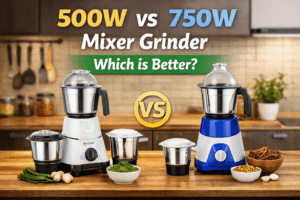
2. Motor Power Explained (500W vs 750W vs 1000W)
Motor power is the first thing most people look at, and rightly so.
500W Mixer Grinder
Good for:
- Chutneys
- Light masalas
- Wet pastes
Not good for:
- Coconut
- Dry spices in bulk
- Batter grinding
750W Mixer Grinder
Good for:
- Regular Indian cooking
- Coconut and spices
- Thick chutneys
- Small batches of batter
This is the most balanced choice for most homes.
1000W Mixer Grinder
Good for:
- Very heavy usage
- Large families
- Frequent batter grinding
Consumes more power and costs more.
My take:
For most Indian kitchens, 750W is the sweet spot. It gives power without stressing the motor.
You can also read my detailed comparison on 500W vs 750W mixer grinder.
3. Jar Types and Sizes Matter More Than You Think
Many people ignore jars, but they affect daily convenience.
Common jar types:
- Wet jar – for chutney, pastes
- Dry jar – for masalas and spices
- Chutney jar – for small quantities
- Juicer jar – optional
Ideal setup:
- 3 jars is enough for most homes
- 4 jars adds convenience
- 5 jars is luxury, not necessary
Look for:
- Stainless steel jars
- Strong handles
- Tight lids
My take:
Good jars make your life easier more than a fancy motor.
For small households, I’ve also written a guide on the best mixer grinder for small family in India.
4. Blade Quality and Material
Blades decide how fine and smooth your grinding will be.
Good blades should be:
- Stainless steel
- Sharp but thick
- Rust resistant
Avoid:
- Very thin blades
- Loose fitting
My take:
A strong blade with a medium motor often performs better than a weak blade with a powerful motor.
5. Build Quality and Body Material
Mixer grinders vibrate. Cheap plastic cracks over time.
Better options:
- ABS plastic body
- Metal reinforced base
- Rubber feet
Check:
- Weight (heavier = more stable)
- How firm the jars sit on the base
My take:
A slightly heavier mixer usually lasts longer.
6. Noise and Stability
All mixer grinders make noise. But some shake too much.
Look for:
- Anti-slip base
- Balanced motor
- Solid jar locking
My take:
If a mixer walks on the counter, it’s not built well.
7. Safety Features You Should Not Ignore
These protect both you and the machine.
Important safety features:
- Overload protection
- Thermal cutoff
- Locking system
These prevent:
- Motor burning
- Accidents
- Short circuit issues
My take:
Overload protection is more important than extra speed settings.
8. Power Consumption in Indian Homes
According to energy efficiency guidelines by the Bureau of Energy Efficiency (BEE)…
Most mixers run only for:
- 2–5 minutes per use
Even 750W mixers consume very little electricity in real life.
So don’t worry too much about:
- Electricity bills
- Watt numbers
Focus more on:
- Performance
- Durability
If you’re confused about how much power you actually need, read this guide on choosing the right wattage.
9. Common Mistakes People Make
These are very common:
- Buying too low power
- Ignoring jar quality
- Choosing brand over need
- Not checking warranty
- Overloading small mixers
My take:
Most mixer problems are caused by wrong expectations, not bad products.
10. How Long Should a Good Mixer Grinder Last?
A good mixer should last:
- 3–5 years easily
- 7+ years with careful use
Longevity depends on:
- Motor strain
- Cleaning
- Overloading habits
If you are on a budget, you may find my article on the best mixer grinder under ₹3000 in India useful.
Finally
Choosing the right mixer grinder for Indian cooking is not about buying the most expensive model. It’s about matching the machine with your real kitchen needs. Indian cooking involves tough ingredients, so power, blade quality, and jar strength matter more than looks or fancy features.
If you understand your usage and follow the basics — right motor power, good jars, solid build, and safety features — you will easily find a mixer grinder that serves you well for many years without frustration.
My final take:
A mixer grinder is a daily companion in Indian kitchens. Choosing wisely once saves money, stress, and replacement later.
FAQs-How to Choose a Mixer Grinder for Indian Cooking
Is 500W enough for Indian cooking?
For basic cooking yes. For traditional grinding, no.
Is 750W safe for daily use?
Yes. It is actually healthier for the motor.
How many jars do I really need?
Three jars are enough for most homes.
Are expensive brands always better?
Not always. Usage matters more than brand.