
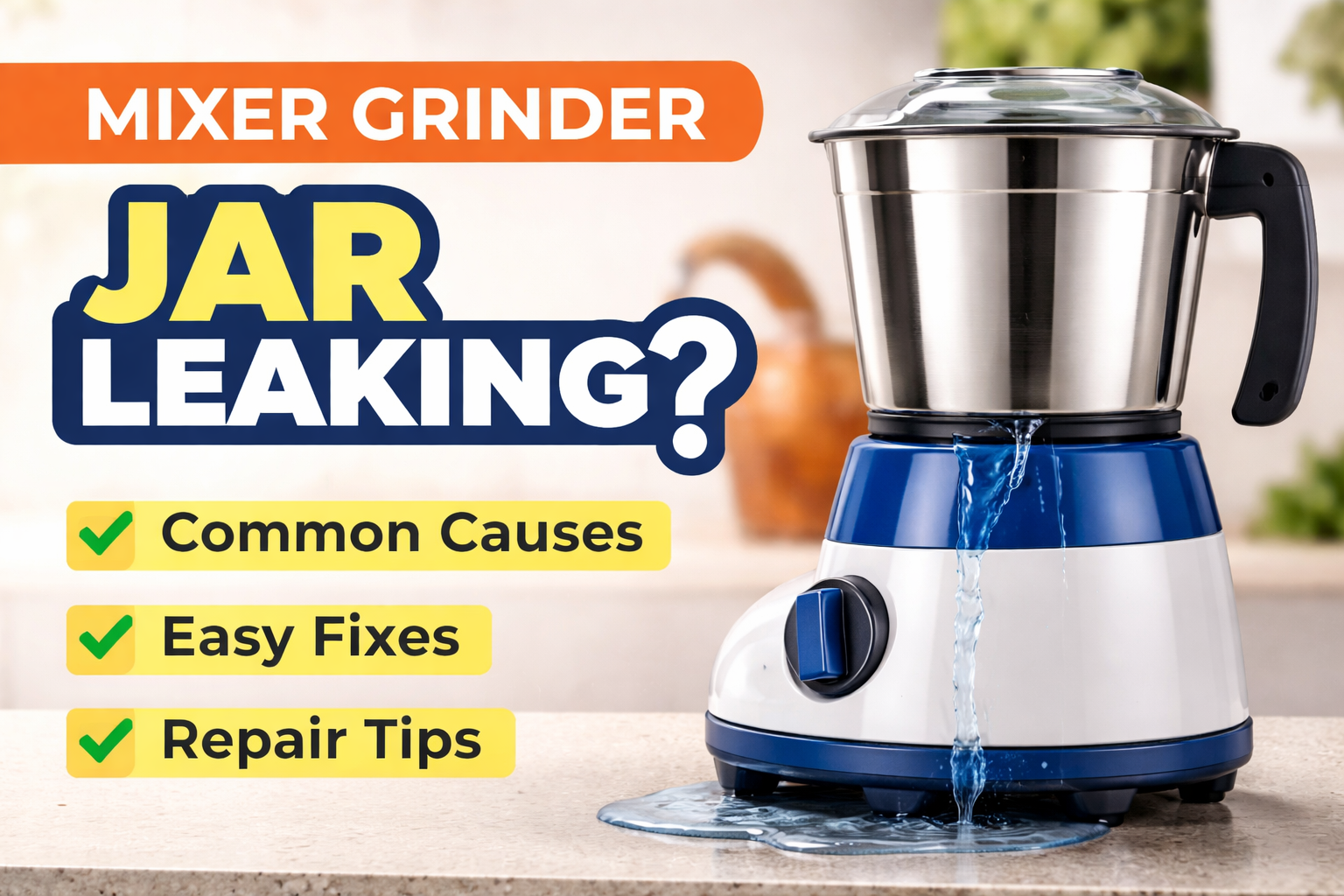
Mixer grinder jar leaking is a common kitchen problem that many people face after long use. You may notice liquid dripping from the bottom of the jar while grinding chutney, batter, or masala paste. Sometimes the leakage is small at first, but if ignored, it becomes worse.
In most cases, jar leakage is not a motor problem. It usually comes from the blade assembly, rubber gasket, or bottom seal. The good news is that many leaking issues can be fixed without replacing the entire mixer.
Let us understand it clearly.
Why Is My Mixer Grinder Jar Leaking?Why Is My Mixer Grinder Jar Leaking?
A mixer grinder jar usually leaks because of a worn rubber gasket, loose blade assembly, damaged bottom seal, or small cracks in the jar body. These components form the sealing system that prevents liquid from escaping during grinding. When the seal weakens, chutney, batter, or masala paste may start leaking from the bottom of the jar.
Table of Contents
Is Jar Leakage Normal?
No.
A mixer grinder jar should be completely sealed. Even during wet grinding, there should be no liquid dripping from the bottom.
If your mixer grinder jar is leaking from bottom, that means the sealing system has weakened.
Common signs:
- Liquid dripping from under the jar
- Water collecting near motor base
- Wet countertop after grinding
- Oil or chutney leaking during operation
Leakage should not be ignored because liquid can enter the motor base and damage internal parts.
Common Causes of Mixer Grinder Jar Leakage
1. Worn or Damaged Rubber Gasket
The rubber gasket (seal ring) sits between the blade assembly and the jar body. It works similarly to an O-ring, which is a common sealing component used in many mechanical devices. Over time:
- It becomes loose
- It hardens
- It cracks
- It loses flexibility
This is the most common reason for jar leakage.
If the gasket is old, replacing it usually solves the problem.
2. Loose Blade Assembly
The blade assembly at the bottom of the jar is fixed with a locking nut.
If it becomes slightly loose:
- Liquid escapes through small gaps
- Leakage increases during high-speed grinding
You can check this by:
- Turning the jar upside down
- Holding the blade carefully
- Gently tightening the bottom assembly
Do not over-tighten.
3. Worn Bottom Bearing or Seal
If leakage continues even after replacing the gasket, the issue may be:
- Internal oil seal wear
- Bearing damage
- Shaft looseness
In this case, the entire blade assembly may need replacement.
4. Cracked Jar Body
Sometimes the jar itself develops small cracks near the bottom.
These cracks may not be visible immediately.
Signs:
- Leakage increases during high-speed grinding
- Dripping continues even with new gasket
- Fine cracks visible under strong light
If the jar body is cracked, replacement is safer.
Mixer Grinder Jar Leaking From Bottom : Step-by-Step Fix
If your mixer jar is leaking, follow this order:
Step 1: Unplug the mixer.
Step 2: Remove the jar and empty it.
Step 3: Inspect the rubber gasket.
- If hard, loose, or damaged → Replace.
Step 4: Check blade tightness.
- Tighten gently if loose.
Step 5: Wash and dry completely before reassembling.
Step 6: Fill with water and test before grinding ingredients.
If leakage continues after gasket replacement, the blade assembly likely needs replacement.
When to Repair and When to Replace
Repair Is Suitable If:
- Only gasket is damaged
- Blade assembly is slightly loose
- Jar is otherwise in good condition
- Leakage started recently
Replace the Jar If:
- Bottom bearing is worn
- Shaft is loose
- Jar body is cracked
- Leakage continues after basic repair
- Jar is more than 5–6 years old
Sometimes replacing the full jar assembly is more economical than repeated repairs.
Common Mistakes That Cause Jar Leakage
Many leakage problems are caused by:
- Over-tightening blade assembly
- Running jar without proper cleaning
- Leaving water inside after washing
- Grinding extremely hard ingredients frequently
- Not replacing gasket early
Even small cracks in gasket can lead to gradual leakage.
Safety Tips
- Never run the mixer if liquid is leaking heavily.
- Do not allow water to enter the motor base.
- Always dry the bottom of jar before placing it on motor.
- Stop immediately if leakage increases during operation.
Liquid entering the motor base can cause short circuit or motor damage.
Using the correct jar for wet and dry grinding can also prevent seal damage. You can learn more in our guide on wet jar vs dry jar in a mixer grinder.
How to Prevent Mixer Grinder Jar Leakage
Preventing jar leakage is usually easier than repairing it. A few simple habits can keep the jar sealing system in good condition.
● Replace the rubber gasket if it becomes hard or loose
● Avoid over-tightening the blade assembly
● Always dry the jar base before placing it on the motor
● Clean the jar thoroughly after grinding sticky ingredients
● Do not store water inside the jar after washing
These small steps can help extend the life of the jar and prevent leakage problems.
Final Thoughts
Mixer grinder jar leaking is usually a sealing issue rather than a major motor defect. In most cases, replacing the rubber gasket or tightening the blade assembly solves the problem.
If your mixer grinder also becomes unusually hot during grinding, you can read our detailed guide on mixer grinder overheating problem to understand the causes and solutions.
However, if leakage continues after basic fixes, replacing the jar assembly is safer than risking motor damage.
A small leak today can become a bigger repair tomorrow if ignored.
If you are planning to replace your mixer grinder instead of repairing the jar, you can also check our guide on best mixer grinders under ₹3000 in India for affordable options.
Frequently Asked Questions
Why is my mixer grinder jar leaking suddenly?
Sudden leakage usually happens due to worn gasket or loose blade assembly.
Can I use the mixer if the jar is leaking slightly?
It is not recommended. Even small leakage can damage the motor base over time.
How often should gasket be replaced?
There is no fixed time, but if the gasket becomes hard or loose, replacement is recommended.
Is it better to replace the jar or repair it?
If only the gasket is damaged, repair is enough. If bearing or shaft is worn, replacement is better.